
QR Code Marketing

Simplifying Industrial Warranty Claims with QR Codes

Explore how QR codes are transforming industrial warranty management in 2026. Learn to reduce downtime, automate claims, and use data for proactive maintenance.
background
Created at: Feb 14, 2026
4 Minutes read

The High Cost of Traditional Warranty Processes

Picture a technician on a factory floor, flashlight in hand, trying to decipher a faded serial number on a greasy, hard-to-reach machine part. This moment captures the frustrating reality of the traditional industrial machinery warranty process. The manual search for an identifier is just the beginning. That number is then relayed to an administrative office, where someone must dig through filing cabinets or navigate a clunky spreadsheet to find the corresponding service history and warranty details.

This process is not just slow; it is a direct drain on productivity. Every minute spent on this data scavenger hunt is a minute of costly equipment downtime, interrupting production schedules and impacting revenue. The system is also incredibly fragile. A single mistyped digit can send a claim into a black hole of disputes and delays. Worse yet, physical records are often lost, damaged, or incomplete, making it nearly impossible to build a reliable equipment service history tracking log. This lack of data integrity creates friction between manufacturers, service teams, and the end customer, turning a simple repair into a complex negotiation.

MetricTraditional Warranty ProcessQR Code-Enabled Workflow
Claim Initiation Time30-60 minutes (manual data lookup)< 1 minute (instant scan)
Data AccuracyLow (prone to transcription errors)High (pre-populated, validated data)
Required PaperworkHigh (physical forms, service logs)Zero (fully digital submission)
Status VisibilityOpaque (requires phone calls/emails)Transparent (real-time updates via scan)
Average Resolution TimeDays to weeksHours to days

Note: Time estimates are based on common scenarios in industrial settings, contrasting manual data entry and verification against the efficiencies of an automated digital system.

QR Codes as the Digital Gateway for Equipment

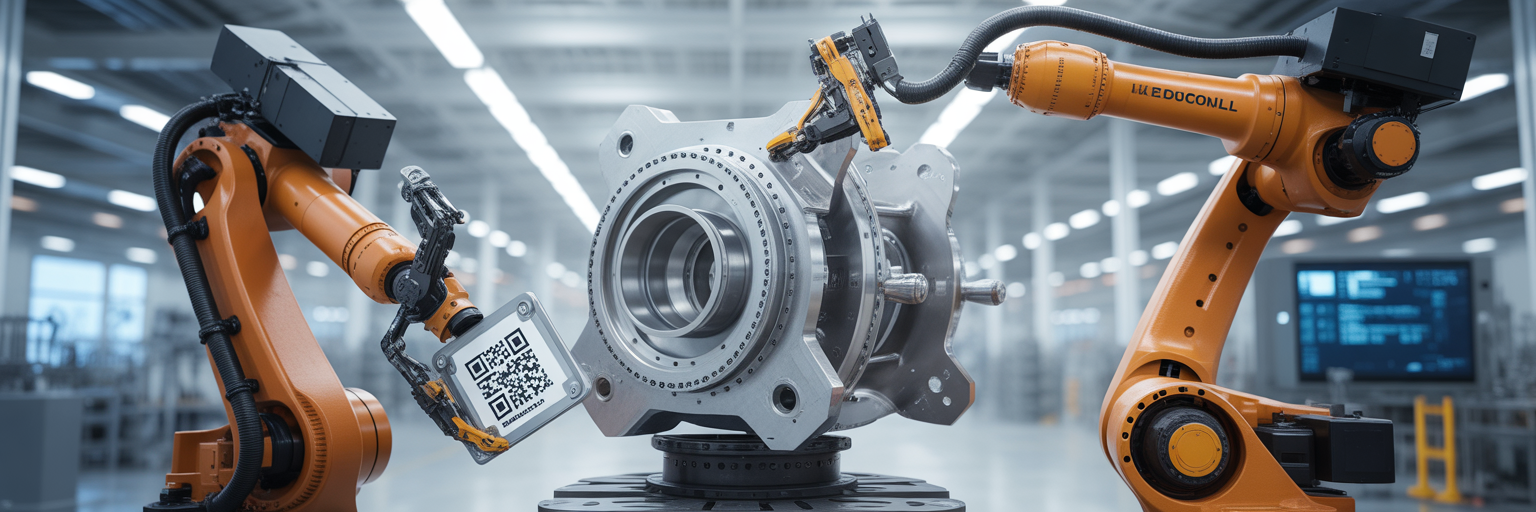
QR code connecting machinery to digital information.

The frustration of that manual process stems from a fundamental disconnect between a physical asset and its digital information. A simple, scannable code can permanently bridge that gap. A QR code, affixed directly to a piece of machinery, acts as a digital gateway. With a quick scan from any standard smartphone, an on-site technician gains immediate access to the machine's entire lifecycle data, eliminating guesswork and manual searches entirely.

This concept goes far beyond linking to a static webpage. The scan connects the physical machine to its digital twin, a comprehensive and dynamic profile containing its serial number, manufacturing date, warranty status, and a complete service log. It is like giving every piece of equipment its own digital birth certificate and medical record, accessible on demand. The most critical element here is the use of dynamic QR codes. Unlike a static code that is printed once and can never be altered, a dynamic code's destination can be updated at any time. This means a manufacturer can log a service event, modify warranty terms, or push a new safety bulletin to the equipment's profile without ever needing to replace the physical tag on the factory floor. For those interested in the mechanics, you can learn more about how our platform works to make this possible.

Designing an Effective QR Code Warranty Workflow

Having instant access to equipment data is a significant step forward. However, the true transformation happens when you design an intelligent process for what happens after the scan. This is where you truly streamline warranty claims through automated workflows that guide the user from problem identification to resolution. A well-designed workflow turns a simple scan into a complete, error-proof, and efficient business process.

Here is how a modern warranty workflow unfolds:

  1. Claim Initiation: A technician scans the QR code for equipment maintenance. A mobile-friendly form immediately opens on their device, already pre-populated with the machine's unique ID, model, and location. This eliminates manual entry and the risk of transcription errors from the very start.
  2. Guided Data Collection: The workflow then prompts the user through a series of logical steps. They can select the issue from a dropdown menu of common failures, add a detailed description, and, most importantly, upload photos or a short video of the problem directly from their phone. This provides rich, visual context that a paper form could never capture.
  3. Automated Routing: Upon submission, the system intelligently routes the information to the correct stakeholders based on pre-set rules. A minor component failure might alert the regional service manager, while a critical system shutdown could trigger an immediate notification to the head of engineering.
  4. Closed-Loop Communication: The process does not end at submission. The technician or customer can re-scan the same QR code at any time to get real-time status updates on their claim, eliminating the need for follow-up calls and emails.

This level of automation is becoming standard in other business functions. As an example, a recent analysis by Postingcat shows how marketing teams use tools that schedule Reddit posts to ensure consistent communication without manual intervention. The same principle applies here: automate repetitive tasks to free up human expertise for actual problem-solving. These sophisticated workflows are made possible by a broad set of our platform's features designed for enterprise needs.

Beyond Claims: Proactive Maintenance and Analytics

Analyzing industrial data for proactive maintenance.

While streamlining claims offers immediate returns, the long-term strategic value lies in the data collected with every single scan. This system evolves beyond a reactive tool for when things break into a proactive platform for comprehensive digital warranty management. Every routine check, part replacement, and software update is captured, creating a rich and complete log for equipment service history tracking.

This aggregated data becomes an invaluable asset. Manufacturers can analyze trends across thousands of units in the field to identify recurring issues. Are you seeing a specific component fail consistently in a certain model after 18 months of operation? That insight provides direct, actionable feedback for your engineering and quality control teams, allowing them to address design flaws before they become widespread problems. The potential extends even further with future integrations, where a scan could pull not only service history but also real-time diagnostic data from connected IoT sensors. This data-driven approach directly improves the bottom line. By analyzing failure rates, you can optimize spare parts inventory, stocking components regionally where they are most needed. This shortens repair times, reduces shipping costs, and ultimately improves customer satisfaction. You can explore other industry-specific solutions we offer that leverage this same principle.

Implementation and Security Considerations

Deploying a digital system in a demanding industrial environment requires more than just good software. It demands a practical approach to hardware, security, and people. A successful QR code for equipment maintenance program must be built to withstand the realities of the factory floor, not just the conditions of an office.

Here are key considerations for a robust implementation:

  • Durability: A paper sticker simply will not survive in harsh industrial settings. The QR codes themselves must be durable, using materials like etched metal plates bolted to the chassis or chemical-resistant polyester labels that can withstand abrasion, moisture, and extreme temperatures.
  • Security: This is non-negotiable. The backend platform must be built on a foundation of security, with features like role-based access controls. This ensures a field technician can submit a claim, but only an authorized manager can approve a high-cost repair or view sensitive service data. We detail our commitment to this on our security and trust page.
  • Integration: A modern warranty system cannot operate in a silo. It must communicate with your existing business tools. Look for platforms with robust APIs that can seamlessly connect with your ERP and CRM systems, ensuring a single, consistent source of truth across the organization.
  • User Adoption: The most advanced technology is useless if it is not used. The post-scan workflow must be intuitive and demonstrably easier than the old paper-based method. If it feels like more work, technicians will find ways to bypass it. The user experience must solve a real problem for the person holding the phone.